AI has changed how we build products, not why we build them.
Today, we can spin up code, draft copy and generate wireframes in a fraction of the time it took just a short while ago. But generating an interface isn’t the same thing as designing an experience.
The closer a design gets to real users, the less a polished AI-generated screen tells us about whether it’s ready.
An interface might look impressive, yet still introduce a confusing interaction, overlook an accessibility barrier or fail to solve the problem users actually need help with.
In fact, visual polish can make those fundamental flaws even harder to spot.
That’s because many of the decisions that make a product useful are invisible on the surface.
UX provides the discipline to make those decisions through established, human-centred principles: deep user research, logical information architecture, intuitive interaction design and rigorous usability testing.
While AI can drastically accelerate production, teams still need to answer the most critical questions:
- Who is this product really for?
- What problem are they trying to solve?
- Is this the right solution?
- What happens when something goes wrong?
- Will people understand it? Trust it? Want to use it?
Ultimately, faster production only raises the stakes for good design. AI can get us to the finish line quicker, but UX ensures we’re running in the right direction.
Here are seven reasons why human-centred design matters more than ever in the AI era:
1. AI generates output, but UX identifies the right problem
An AI tool can write thousands of lines of functional code to build an app, but it won’t tell you if that app actually needs to exist.
UX research prevents teams from building brilliant solutions to problems nobody actually has.
It requires empathy, active listening and human observation to uncover the friction in a user’s daily life before a single line of code is ever generated.
2. Trust and transparency are harder to earn
As digital products increasingly rely on AI to make recommendations, sort data or automate tasks, users may encounter the “black box” effect.
This means they can see the result without understanding what informed it or how reliable it is.
When people don’t know why a recommendation appeared or whether an automated decision can be challenged, it becomes harder to judge how much confidence to place in the system.
UX professionals help people make those judgements.
They design experiences that explain relevant information, communicate uncertainty and give users meaningful control, including ways to question, correct or override an output.
For more on working with AI and helping users judge when to trust its outputs, read our article on working with AI and building trust.
3. Faster production makes validation more important
AI can help a team turn an idea into a working prototype quickly. But a working prototype is evidence that something can be built, not that people can use it successfully.
An interface can look polished while hiding confusing navigation, missing information or assumptions that don’t reflect how people actually work.
If those assumptions go untested, teams risk carrying them into development and repeating them across the product.
UX brings real users into the process to test whether the experience makes sense and helps them achieve their goals.
As AI accelerates production, this validation becomes even more valuable: teams need to identify what deserves further investment before building more of it.
4. Error recovery requires human empathy
Technology fails. AI hallucinates, links break and users click the wrong buttons.
AI might recognise an error state, but UX dictates how the product guides the user out of it.
Good UX ensures that when something goes wrong, the user isn’t met with a cold, confusing error code.
Instead, they are met with clear, empathetic guidance that helps them correct the issue without feeling frustrated.
5. Usability is not a default setting
Users bring different expectations, abilities and levels of experience to a product.
They may be distracted, under pressure or using it on a small screen. A generated interface doesn’t automatically account for those circumstances.
UX research and usability testing help teams understand whether people can find what they need, interpret the information correctly and complete their tasks.
This matters because every unclear label, unexpected interaction or unnecessary step asks users to work harder.
In a checkout, that might mean an abandoned purchase. In a healthcare service, it could mean someone misunderstanding an important instruction.
Usability determines whether a product’s intended value translates into a successful outcome.
6. Ethical design needs human oversight
AI models learn from historical data, which means they can inadvertently reproduce historical biases.
Without careful oversight, AI-generated products can exclude marginalised groups, ignore accessibility standards or create unfair outcomes.
With rising expectations and legal requirements for digital accessibility across the globe, leaving AI in charge of accessibility without human oversight can have costly legal consequences.
UX advocates for responsible design. It brings a critical, human-centric lens to product development, ensuring digital spaces are inclusive, accessible and safe for everyone.
7. Emotional connection drives long-term retention
Completing a task is important, but so is how people feel along the way.
An experience that leaves someone confused, anxious or frustrated gives them little reason to return.
AI can help streamline interactions, while UX considers the human needs behind them: reassurance before an important decision, clear feedback after an action or a sense of control when something unexpected happens.
These details build confidence and trust over time. As AI makes products faster to create, understanding how people experience them remains essential to creating something they want to keep using.
What’s next?
Use AI to explore ideas, accelerate routine tasks and support your design process.
But first, understand how to use it, how to evaluate its outputs and where it risks weakening the experience.
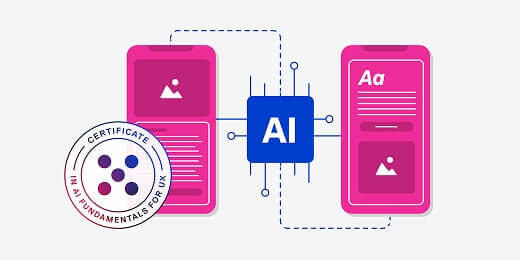
The Certificate in AI Fundamentals for UX can help you become an AI-powered designer, with the confidence to work alongside AI, judge when and where to trust it, and recognise when relying on it could undermine your own design and technical skills.
Yes, AI can help you explore more possibilities and move faster.
But without your UX skills to guide it, you risk building the wrong solution faster, overlooking barriers and creating something that works technically but fails the people it’s meant to serve.
AI is making it easier than ever to create digital products. UX is what ensures those products are useful, usable, responsible and actually worth creating.
If you found this article insightful, be sure to give these related articles a read:
- AI job apocalypse? The numbers say no
- The Future of UX in an AI World: Why Designers Are Becoming Strategic Leaders
- Here are the AI skills you need in 2026