From sales strategy to product leadership: Chandika’s career in context
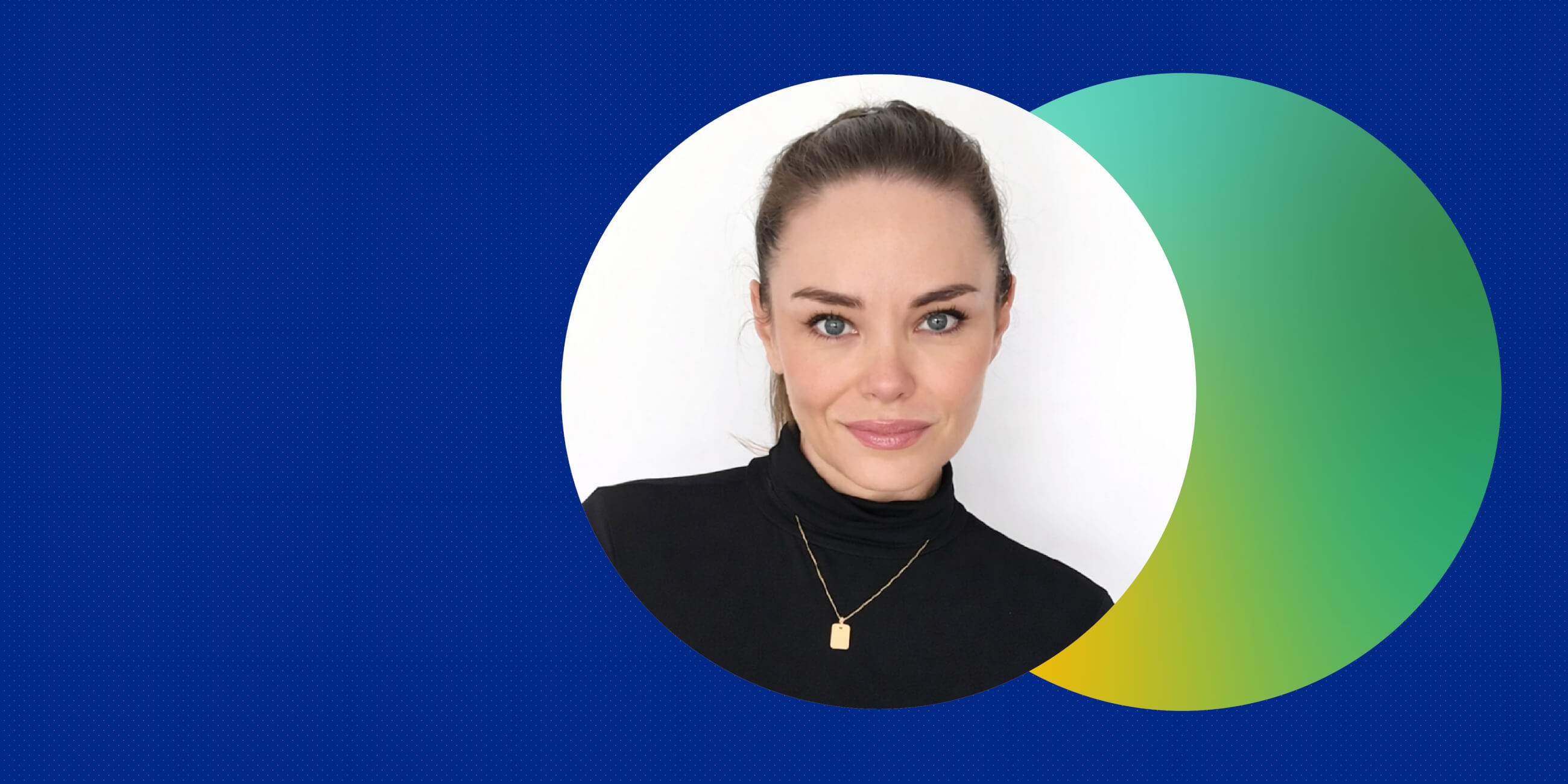
Chandika’s professional history has centered on banks. Since starting her professional career in 2011, she has taken on a range of roles within the banking sector, including Business Manager, Operations Manager and National Sales and Strategy Manager. Currently, she’s a Product Owner at FNB South Africa (First National Bank), one of the largest banks in South Africa.
In this position, she saw an opportunity to eliminate the bank’s reliance on external teams to create products.
The problem with relying on external design talent
Initially, Chandika worked on product strategy exclusively, leaving user experience work to outsourced teams.
But she noticed that, because they were using external designers, those teams didn’t always know how to translate requirements into solutions.
External designers didn’t understand the nuance of employee benefits or the intricacies of customers. This led to a ‘Telephone Game’ effect where:
- Business needs were lost in translation.
- Customer needs were oversimplified or missed.
- Approvals took months due to misaligned expectations.
So Chandika decided to take matters into her own hands.
Why learning UX felt like the right move
Chandika decided to learn UX and close the gap herself. In the process she took UX work in-house. In particular, she learned how UX fit into her work as a product owner, allowing her to have a 360-degree view of the product lifecycle and shortening the feedback loop.
I no longer view ‘Design’ as a separate phase, but as a core part of the product strategy that ensures we are solving the right problems for the right people.
This shows the value of having the expertise to do design in-house. While external teams can misunderstand or ignore requirements and don’t truly know what is most valuable to your users, those working in-house know this information intimately and can translate it into great user experiences.
That is, as long as those who are working in-house know how to turn their ideas into designs.
Applying the UX Design Institute’s rigorous framework for real-world impact
To take on the challenge of UX herself, Chandika chose to build her skills through the UX Design Institute. She didn’t stop at just one course. She completed:
- The Professional Diploma in UX Design,
- The Professional Certificate in User Research,
- The Professional Certificate in Content Design,
- The Professional Certificate in UI Design, and
- The Working with Developers short course
This well-rounded skillset, covering multiple areas of UX, transformed her approach to work and enabled her to deliver real, tangible impact.
She describes it as “the power of the triple lens”, explaining that her education at the UX Design Institute helped her understand “the methodological glue” connecting the roles of Product Manager, Product Owner and UX Designer, each playing a distinct part in the design process:
- The Product Manager (The ‘Why’): “The UX Design Institute taught me that user satisfaction is a leading indicator of business success”
- The Product Owner (The ‘What’): “As a product owner, I manage the backlog and the delivery.”
- The Designer (The ‘How’): “I use the UX Design Institute’s Research and Information Architecture frameworks to ensure that the final interface is a direct reflection of the business goals I set as a product manager and the technical specs I manage as a product owner.”
Becoming a true product architect: how Chandika’s newfound skills elevated her career
Now that Chandika has the UX skills to understand the entire product lifecycle, she considers herself a “product architect,” something that wouldn’t have happened without the help of the UX Design Institute.
Because I understand the business needs (product manager), the delivery constraints (product owner), and the user’s mental model (designer), I can navigate from problem to solution with a speed and accuracy that was previously impossible for us.
Level up your design skills with the UX Design Institute
If you would also like to bridge the gap between product strategy and user experience design, like Chandika did, you can transform your career with the help of the UX Design Institute.
Whether it’s learning UX skills to become a more strategic product professional or forging a new career path entirely, you can learn what you need through any of the UX Design Institute’s certificates or diplomas. Each programme offers a fully up-to-date course that is valued by employers and is university credit-rated. Plus, up to date with AI.
For example, with the Professional Diploma in UX Design you’ll learn the full UX process, from research to wireframes to prototyping, while receiving 1-on-1 mentoring and building a standout portfolio.
Go to the official course page of the certificate or diploma of your choice to get more information or book a call with one of our advisors for free advice.
|
And for more success stories, check out these articles:
- Levelling up with the UX Design Institute: How a Senior Designer filled critical knowledge gaps after years in the industry
- Samantha’s career pivot with the UX Design Institute
- A civil servant who became a UX advocate: How learning UX design enhanced John’s career