There’s no single reason to learn UX.
For some professionals, UX opens the door to an entirely new career. It gives them the skills, structure and confidence to take what they already know and apply it in a new direction.
For others, the goal isn’t to change direction at all. It’s to become better at what they already do: strengthening their expertise, filling knowledge gaps and keeping pace as technology and expectations evolve.
What both paths have in common is the opportunity for professional growth and skills that modern teams increasingly value.
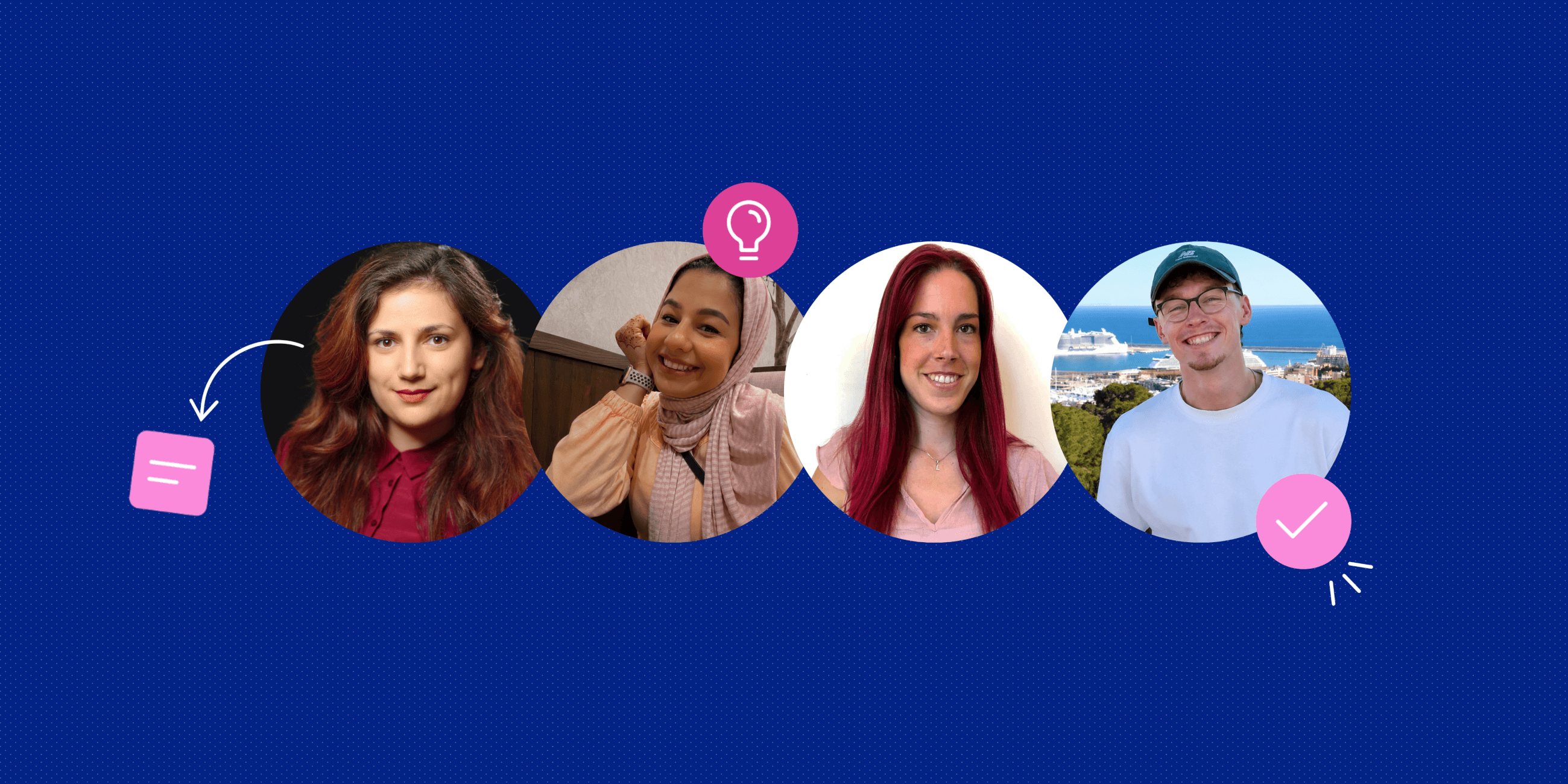
Let’s take a look at four different routes taken by some of our recent graduates.
Their starting points and goals may be different, but their stories have something important in common: UX skills can move your career forward, wherever you’re starting from.
Applying existing strengths in a new direction: Marina turned psychology into a UX career
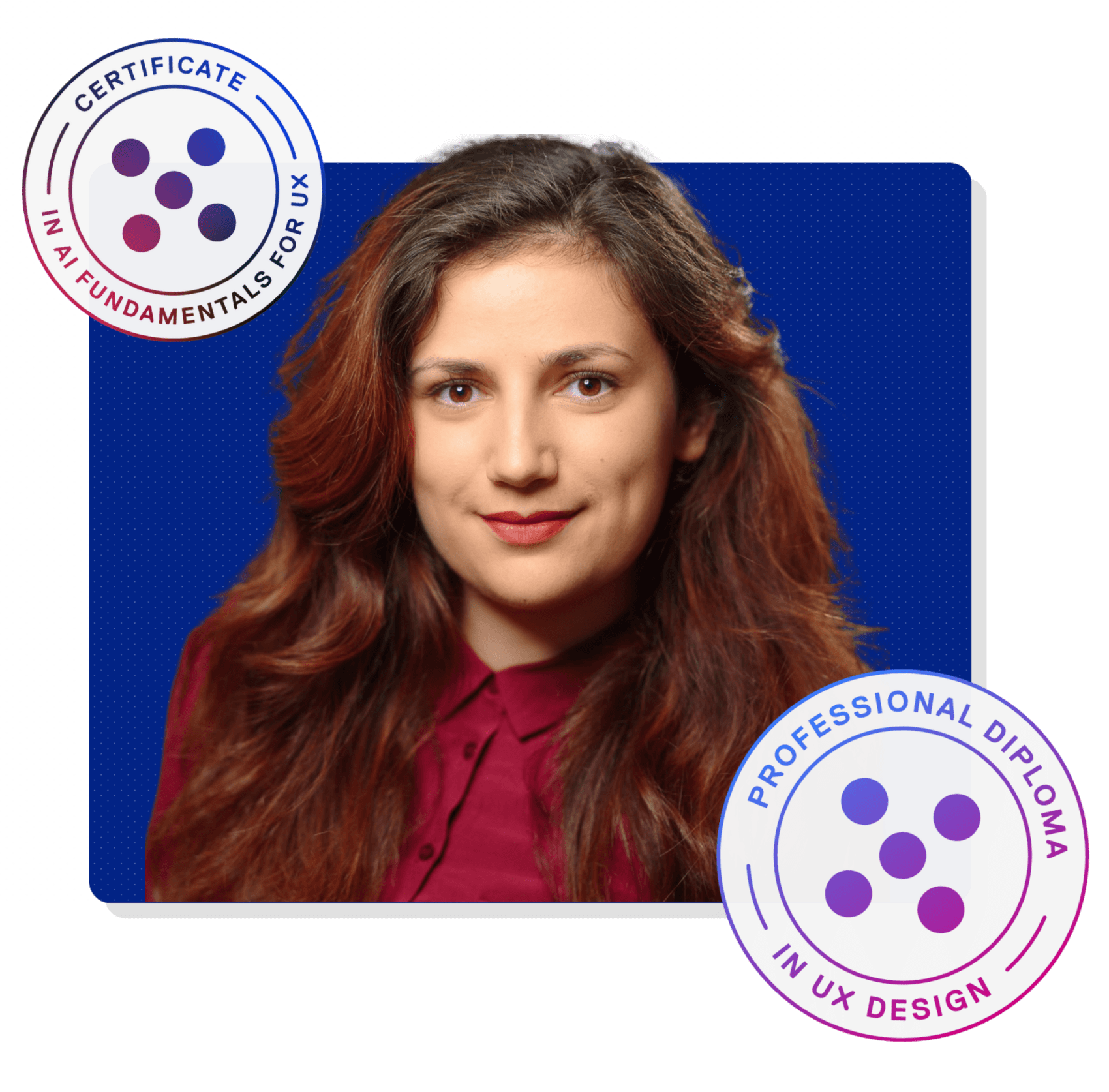
When Marina moved from Bulgaria to Germany at 18 to study psychology, UX design wasn’t part of the plan.
Her early interests centred on human behaviour, clinical psychology and later organisational psychology. After graduating, however, she found herself uncertain about what should come next.
Then she came across an advertisement for a UX design course.
At the time, she didn’t even know what UX meant. After weeks of research, she enrolled in the Professional Diploma in UX Design and discovered a field where many of the skills and interests she had already developed could take on a new purpose.
Changing fields can be intimidating, but I felt confident in my decision the moment I started the course.
Marina went on to secure her first UX/UI role at a pharmaceutical technology startup, where she developed extensive usability testing experience.
From there, she moved into healthcare, contributed to Germany’s nationwide electronic patient record project and continued developing her UI and design systems expertise.
Today, she is a Senior UX/UI Designer at Eurobank Bulgaria AD (Postbank). She also recently earned the Certificate in AI Fundamentals for UX, continuing to build on the skills that have shaped her career.
Looking back, Marina credits the strong UX foundations she developed early in her career with helping her navigate new industries, challenges and even setbacks.
Once again, it was my UX mindset that distinguished me from the other candidates.
Her psychology background didn’t disappear when she changed careers. UX gave her a new way to apply it, turning her understanding of human behaviour into an advantage throughout her design career.
Adding structure to experience: Alaa strengthened the foundations behind her UX career
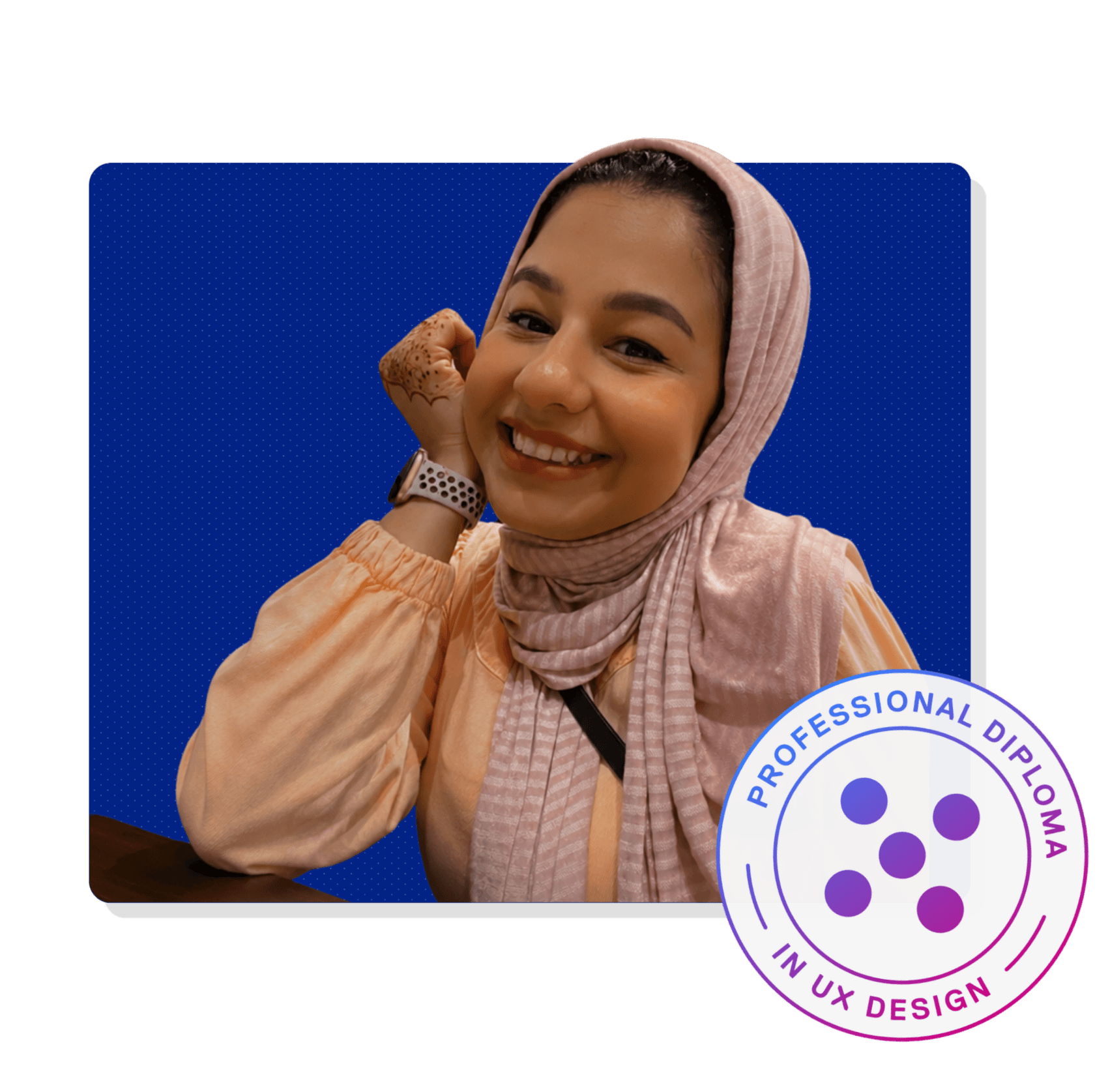
Alaa began her professional life far outside UX, with a background in banking and accounting.
She made the leap into UX years ago and developed her skills through hands-on experience as her career progressed.
That experience eventually took her to a senior position in the industry. But as her responsibilities grew, Alaa recognised a gap between doing UX and having the structured knowledge to explain the thinking behind it.
I never studied anything remotely related to UX. I come from a banking/accounting background, and as I shifted my career years ago, everything I ever knew and applied to my job was all from hands-on experience, not from knowledge.
She enrolled in the Professional Diploma in UX Design to put a structured framework behind what she had learned on the job.
Rather than simply teaching her what to do, the programme helped her better understand why she was doing it. Research, analysis, wireframing, prototyping and testing became part of a connected process rather than individual activities.
That changed the way she approached her work.
As someone already working in UX, it helped me strengthen my foundations, become more confident in explaining my design decisions and connect my work more clearly to user needs and business goals.
Today, Alaa is a Senior UX Architect at VML.
Her career may have started in banking and accounting, but combining years of practical experience with a structured UX foundation has helped her approach senior-level work with greater confidence and clarity.
Keeping skills current: Laura refreshed her expertise for a changing industry
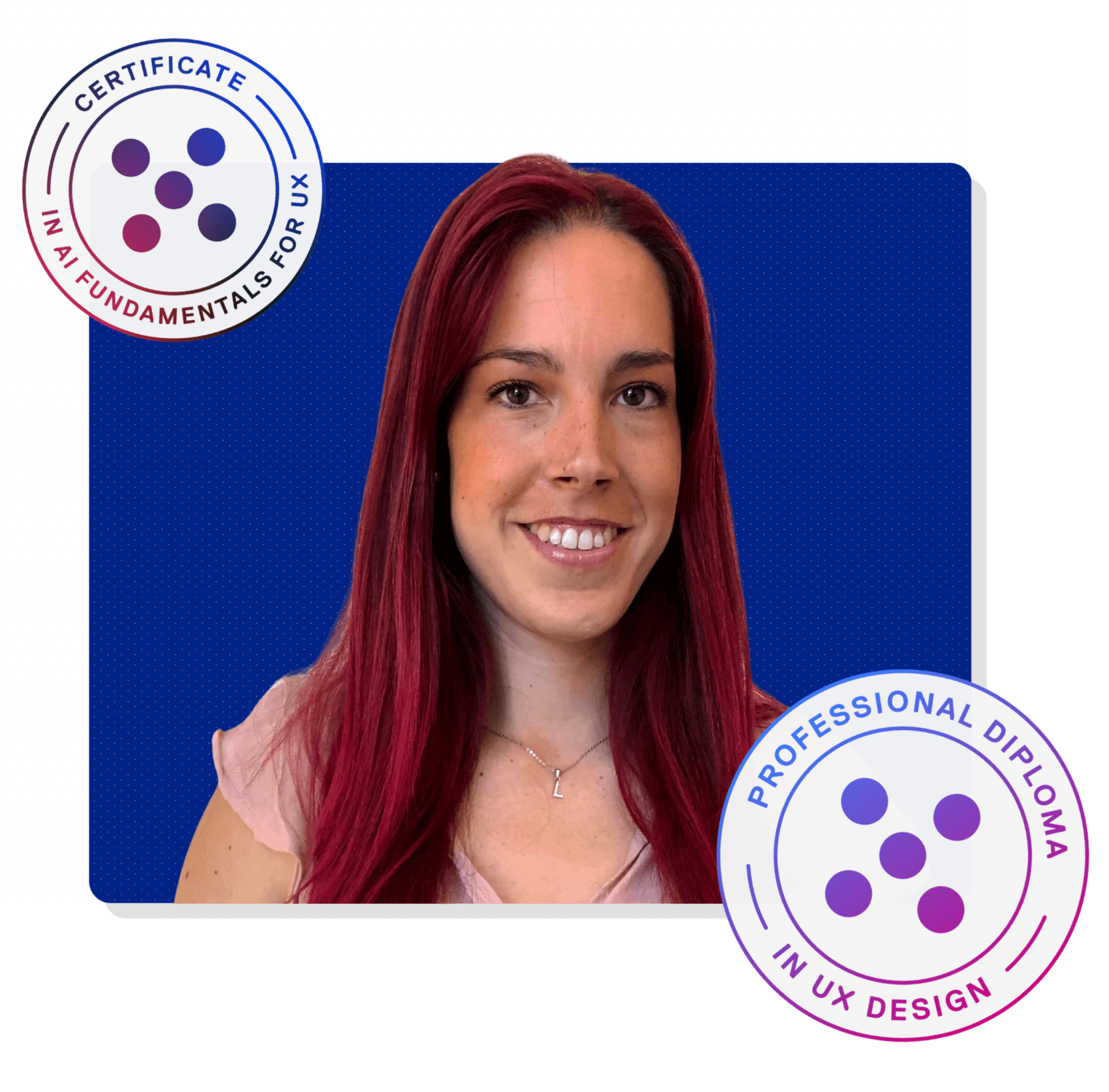
For Laura, an experienced Digital Transformation Leader, UX was already closely connected to years of work across web and product design, digital marketing and digital transformation.
Her challenge was different: how do you keep established expertise relevant as the industry around you changes?
Laura completed the Professional Diploma in UX Design, alongside the Certificate in AI Fundamentals for UX, to revisit her foundations through the lens of modern UX practice.
Stepping back into a learning mindset when you already have industry experience can be a challenge, but it’s incredibly rewarding.
The structured programme allowed her to work through the complete UX process as though she were approaching a real-world project. Along the way, she refreshed core principles, strengthened her research and prototyping skills and explored how AI could support modern UX workflows.
For Laura, the value wasn’t about starting over. It was about building on what was already there while making sure her skills continued to evolve.
The hands-on approach of the diploma was incredibly valuable, as it gave me the space to adapt to new methodologies while seamlessly refreshing my established skills.
The result is a broader, more current toolkit that can support Laura across different roles and areas of work.
I look forward to applying this refreshed and user-first mindset directly to my future roles, as I believe these skills are highly transferable and can be applied across different areas.
As technology continues to change the way teams work, Laura’s experience shows how continuous learning can help established professionals keep their expertise current and relevant.
Developing specialist expertise: Jack made accessibility part of the process
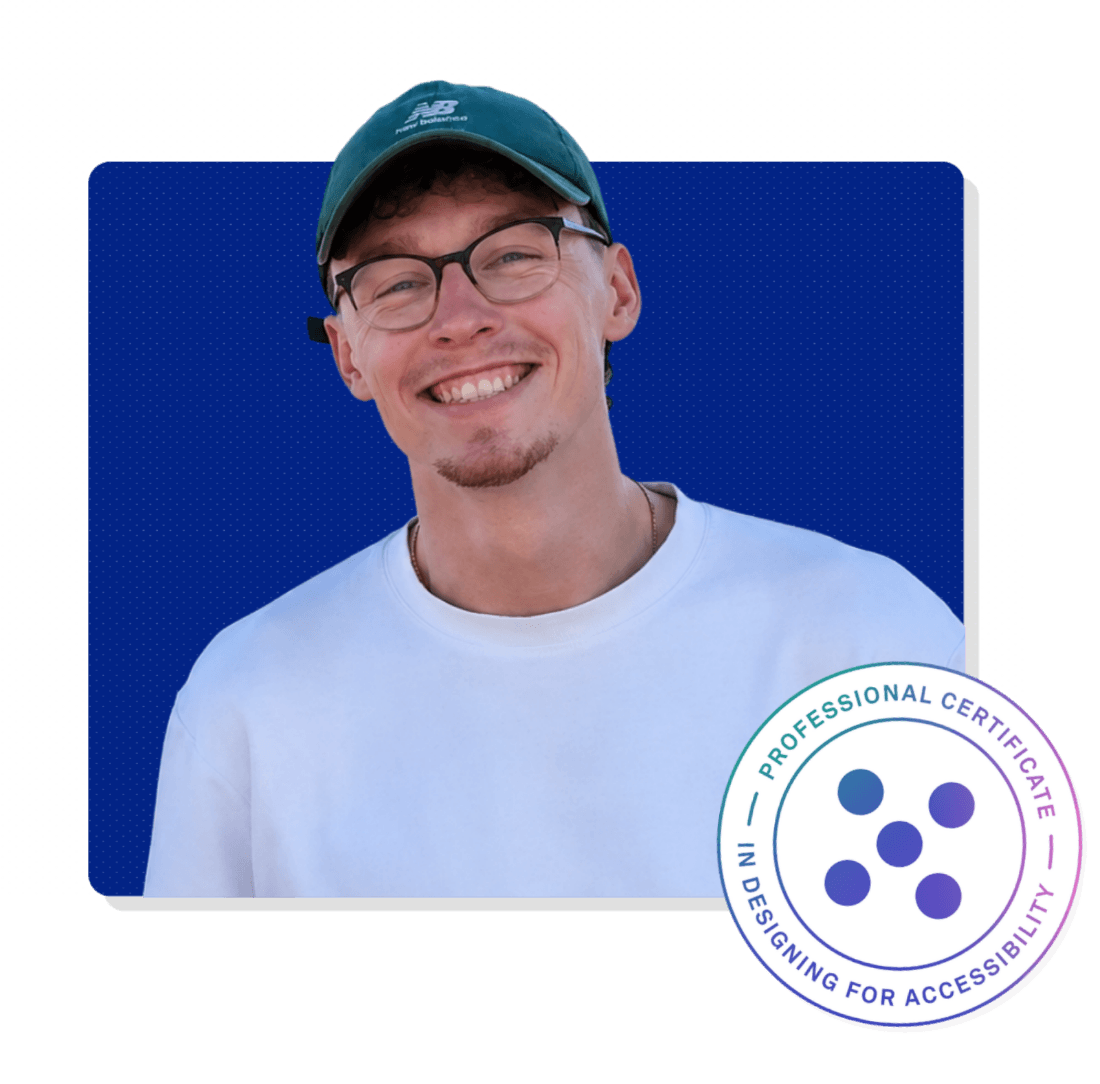
For Jack, professional growth meant going deeper into an area that was becoming increasingly important to his existing work.
As a Senior UX/UI Designer at METRO Markets GmbH, Jack designs for a B2B marketplace used by millions of people. Accessibility was already part of that responsibility, and his interest in inclusive design stretched back even further to previous work in social design.
But with regulations such as the European Accessibility Act increasing the focus on accessible digital products, Jack wanted to turn that interest into stronger practical expertise.
He completed the Professional Certificate in Designing for Accessibility.
One lesson in particular changed his approach: accessibility shouldn’t be treated as a checklist at the end of a project.
The most valuable aspect of the course was how it translated accessibility from theory into practical design decisions.
Jack began thinking about accessibility as something that should influence decisions from the very beginning.
And the impact extended beyond his individual design work.
The knowledge he gained helped him make accessibility requirements clearer and more actionable for developers, QA teams and other stakeholders.
It’s given me a better way to support development and QA by making accessibility requirements clearer, easier to act on, and part of existing workflows.
For Jack, developing specialist expertise has made him more effective in his own work while also helping accessibility become a more integrated part of how his wider team works.
Different starting points. One shared outcome: Professional growth.
Marina used transferable skills from psychology to build a career in UX.
Alaa added structure and deeper knowledge to years of hands-on UX experience.
Laura refreshed and broadened an established digital skillset for a rapidly changing industry.
Jack developed specialist accessibility expertise that now influences both his own work and his wider team.
Four different starting points. Four different reasons to learn. But all four demonstrate the professional value that UX skills can bring.
For some, that value can mean opening the door to a new career. For others, it can mean becoming more confident, current or specialised in the career they already have.
And as roles evolve, AI reshapes workflows and expectations continue to grow, the ability to understand users, solve problems and contribute across teams is becoming valuable in more areas of work.
Wherever you’re starting from, building the right skills can help you become more valuable in the work you do and more prepared for where your career takes you next.
Learn more about the Professional Diploma in UX Design and take the next step in your professional growth.
|